.svg)
Admin Feature
Editing the website is an account owner-level permission. If you don't see this option, contact your account owner to enable these permissions for you.
Images help your website content stand out and make your pages more engaging for visitors. Adding photos to your pages can illustrate your message, highlight your local market, and make your content easier to read.
Whether you are sharing local insights, promoting community businesses, or publishing educational content for buyers and sellers, images help bring your message to life and encourage visitors to spend more time on your website.
Need to Know
-
Images can be added anywhere you edit content using the built‑in editor
-
Images must first be uploaded to your website's FileBrowser, which acts as a private image library for your website
-
Images can be resized and edited directly inside the content editor
Table of Contents
Why Adding Images to Content Matters
Images do more than decorate your website. They improve how visitors experience your content and help communicate your message more clearly.
Benefits of adding images to your content include:
-
Improves SEO by giving search engines additional context about your page
-
Breaks up long blocks of text so content is easier to scan and read
-
Helps illustrate examples such as neighborhoods, homes, or local attractions
-
Makes your pages feel more professional and visually appealing
-
Encourages visitors to spend more time on your website
-
Reinforces your written message with visual context
Images can also help you connect with your audience by showcasing your local expertise. Consider sharing photos of neighborhoods, community events, local businesses, or market insights.
How to Insert an Image into Your Content
Follow these steps to add an image to any page or blog post.
-
Open the page or blog post you want to edit
-
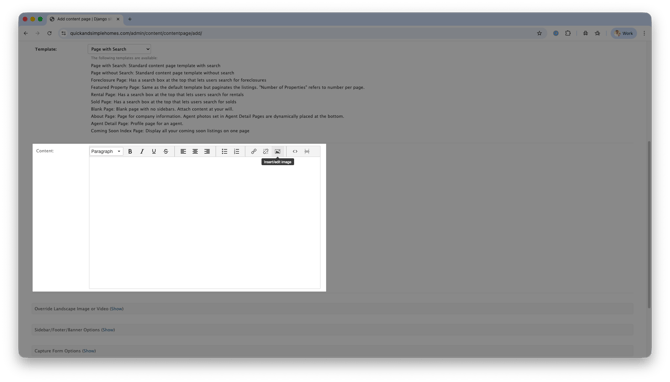
In the Content Editor, click the Insert/Edit Image button in the editor toolbar
-
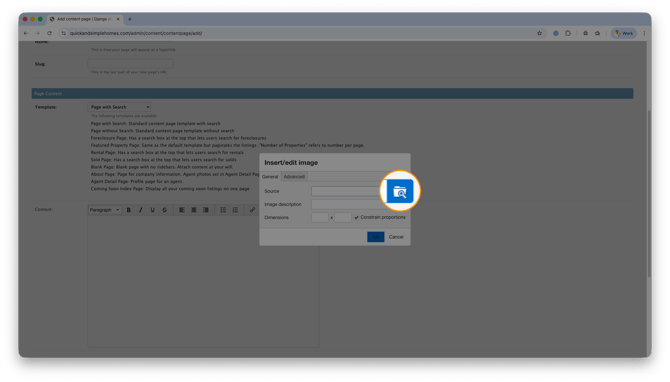
Select Source to open the FileBrowser
-
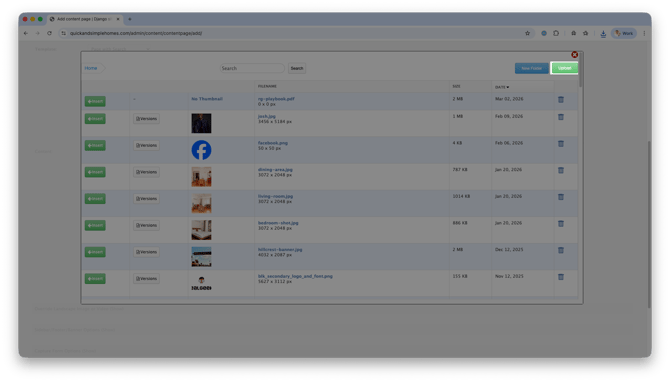
Click Upload
-
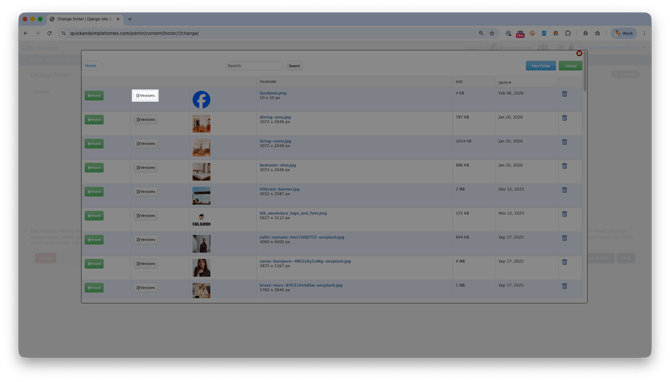
After the image is uploaded, click Insert next to the image you want to use
-
Adjust the image Dimensions if you want to resize the image
-
(optional) Add an Image Description for screen-to-audio readers for visually impaired users
-
Click OK to insert the image into your content
Best Practices for Using Images
Using images strategically helps your content look more professional and improves the reading experience for visitors.
-
Use images that relate directly to the topic you are writing about
-
Avoid extremely large images that may slow down page loading
-
Add image descriptions when possible to improve accessibility and SEO
-
Place images between sections of text to break up longer paragraphs
-
Use high‑quality images that look clear and professional
Well placed images can turn a simple article into engaging content that visitors actually want to read and share.
Frequently Asked Questions
-
Do I have to upload images before inserting them?
Yes. Images must be uploaded to the FileBrowser before they can be inserted into your content. -
What is the FileBrowser?
The FileBrowser is your website's private media library where images and files are stored for use across your website. -
Can I resize images after inserting them?
Yes. You can resize images using the Dimensions fields or by dragging the corner of the image inside the editor. -
Can I reuse the same image on multiple pages?
Yes. Once an image is uploaded to the FileBrowser, it can be reused anywhere on your website.
Need Help?
- Call us at 844-311-4969 (Mon–Fri, 8 AM–8 PM CST)
- Email support@realgeeks.com
- View our Live Events page for free coaching and training.
- Join the Real Geeks Mastermind Group on Facebook for peer tips and best practices